Local Law 126 Bronx

Parking Garage Concrete Repair in the Bronx for Local Law 126

Spalled slabs, loose ceiling concrete, and rusted rebar are the most common repairs in a Local Law 126 report. Our crews remove the damaged concrete, treat the steel, and rebuild each area so it holds up to Bronx traffic, road salt, and winters.

Slab, Ceiling & Column Repairs

Rebar Cleaned or Replaced

Work Matched to Your QPSI Report
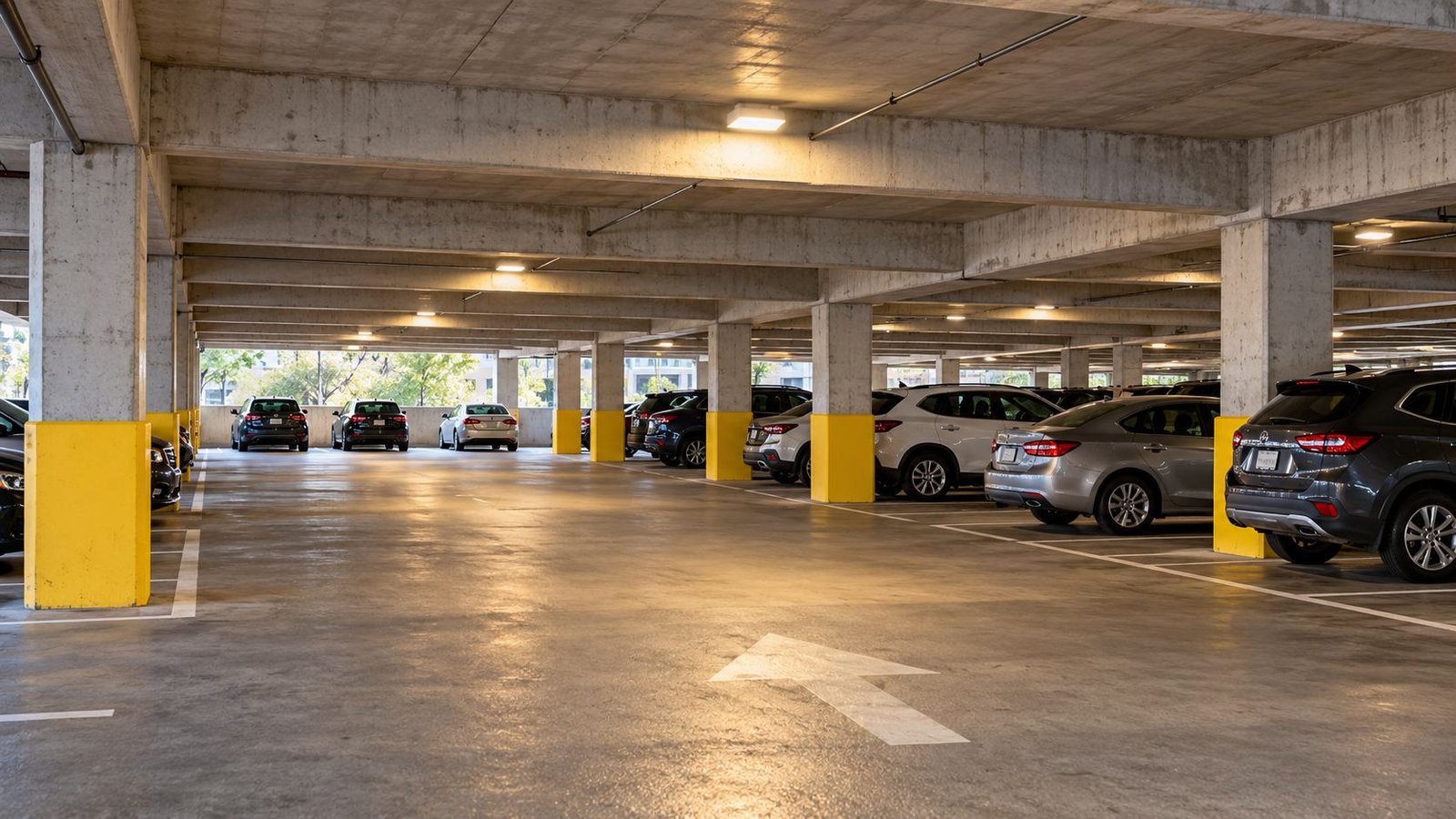
Illustrative concrete parking garage interior with yellow column guards and parked vehicles.

What Is Parking Garage Concrete Repair?

Parking garage concrete repair is the removal of cracked, delaminated, or spalled concrete and the rebuilding of that area after the steel inside has been cleaned and protected. In most garages the damage starts when salt water reaches the rebar, the steel rusts and expands, and the concrete around it breaks loose. A proper repair removes all of the unsound concrete, not only the loose pieces, so the new material bonds to solid concrete.

In a Local Law 126 report, concrete damage can be listed as SREM or Unsafe depending on how far it has gone. Loose concrete overhead is often an Unsafe item, while early delamination is usually SREM. We follow repair guidance from the International Concrete Repair Institute and the American Concrete Institute, and when the steel has lost enough section to affect strength, the work moves to an engineer-designed structural repair.

Concrete Repairs We Handle in Bronx Garages

Concrete damage shows up in three places in a parking garage, and each one calls for a different repair approach.

Slab & Deck Repairs

Top-side repairs on driving lanes, ramps, and parking stalls where traffic and salt do the most damage.

Overhead & Ceiling Repairs

Underside repairs on slabs and beams where loose concrete can fall onto cars and people.

Column & Wall Repairs

Vertical repairs at column bases, walls, and curbs where salt water collects and splashes.

Signs Your Parking Garage Needs Concrete Repair

 01

Hollow Sound When Tapped

Areas that sound dull under a hammer or chain drag, showing the concrete is separating inside.

 02

Exposed Rebar

Steel bars showing through the slab or ceiling, usually rusted and losing thickness.

 03

Popouts & Potholes

Small craters on the driving surface where concrete has broken out under traffic.

 04

White Efflorescence

White deposits on ceilings and walls that show water moving through the concrete.

 05

Scaling at Column Bases

Flaking surface concrete where salt water sits around columns and walls.

 06

Failed Old Patches

Earlier repairs that have cracked, come loose, or started spalling again around their edges.

How Corrosion Breaks Garage Concrete Apart

Almost every concrete repair in a garage traces back to the same chain reaction inside the slab.

Chlorides Reach the Steel

Salt from cars soaks through cracks and pores until it reaches the rebar and breaks down the protection concrete gives it.

Rust Expands

Rust takes up several times more space than the steel it came from, pushing hard on the concrete around it.

The Concrete Lets Go

That pressure cracks the concrete from inside, first as hidden delamination and then as spalls that fall away.

How We Repair Parking Garage Concrete

Most patch failures come from shortcuts in preparation. Our process follows the surface prep practice set out by the International Concrete Repair Institute.

Sounding & Mapping

Every repair area is found by sounding with a hammer or chain drag and marked out before any concrete comes out.

Saw-Cut Edges & Full Removal

Edges are saw cut no deeper than the rebar cover, and concrete is removed about 3/4 inch behind corroded bars so the patch locks around the steel.

Rebar Cleaning & Replacement

Exposed steel is blasted clean, and bars that have lost significant section are supplemented as directed by an engineer.

Patching, Curing & Anodes

The surface is brought to saturated surface-dry, the repair material is placed and cured, and galvanic anodes can be added at the edges to slow new corrosion around the patch.

Types of Concrete Damage in Parking Garages

Each type of damage needs its own repair, so the first step is naming it correctly.

1

Spalling

Concrete that has broken away, usually over corroded rebar, leaving a rough crater behind.

2

Delamination

A hidden crack running parallel to the surface, found only by sounding before it turns into a spall.

3

Cracking

Shrinkage, structural, or corrosion cracks, each treated differently with sealing, injection, or removal.

4

Scaling

Surface flaking from freeze-thaw and deicing salt that exposes the coarse stone in the concrete.

How Concrete Repairs Fit Your Local Law 126 Report

Concrete items in a Local Law 126 report come with a location, a classification, and a date. We repair each listed area and record its size, the depth of removal, and the condition of the steel we found, with photos before and after. Those records let your QPSI confirm the work, whether it closes out an SREM item at the follow-up assessment or clears an Unsafe condition in an amended report.

1. Each repair tied to a report item

2. Removal depth and rebar condition recorded

3. Photos before and after every patch

How a Garage Concrete Repair Job Runs

Every concrete repair goes through the same three stages, no matter its size.

1

Sound & Mark

We sound every area in the report and mark the true repair limits, which are often larger than the damage you can see.

2

Remove & Prepare

Unsound concrete comes out, edges are saw cut, and the steel is cleaned or replaced.

3

Rebuild & Cure

Repair material is placed, finished to match the surrounding concrete, and cured before traffic returns.

Concrete Repair in Older Bronx Garages

Two things about Bronx garages change how deep and how well protected concrete repairs need to be.

Less Cover on Older Rebar

Older garages often have less concrete over the rebar than newer ones, so salt reaches the steel sooner and repairs tend to go deeper.

Roof Levels & Open Decks

Top decks take direct rain, snow, and salt, so repairs there are often paired with a traffic coating to keep water out.

Get a Concrete Repair Scope From Your Report

Send us your Local Law 126 report and photos, and we will measure and price every concrete repair it lists.

Upload Your Report

What Affects the Cost of Garage Concrete Repair

Concrete repair is priced from measured areas after sounding. These are the factors that change the number.

+1 (917) 355-8556

Square Footage of Repairs

Price follows the total area of concrete that has to come out and be rebuilt.

Depth of Removal

Shallow patches cost less than repairs that go behind the rebar or through the full slab.

Overhead or Top-Side Work

Ceiling and beam repairs need forming or hand placement and take longer than deck repairs.

Rebar Replacement

Bars with heavy section loss add steel, labor, and engineering review.

Repair Material

Fast-setting, polymer-modified, and form-and-pour materials each carry different costs.

Galvanic Anodes

Adding anodes at patch edges raises the upfront cost but helps the repair last longer.

Recent Garage Concrete Repair Projects in the Bronx

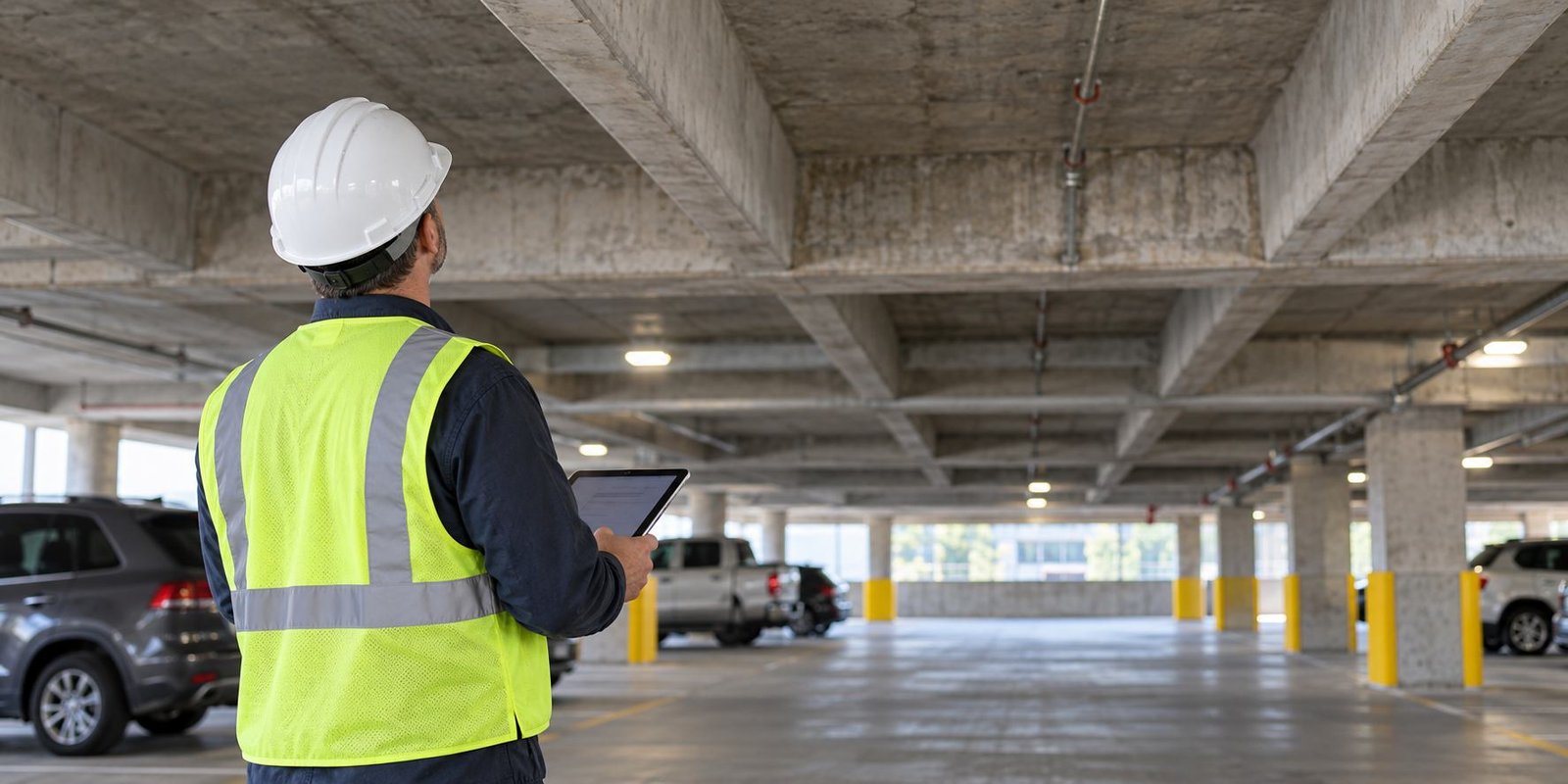
Illustrative garage inspector wearing a white hard hat and high visibility vest.

Project details pending

Real project title and details will be added here.

Illustrative garage inspector wearing a white hard hat and high visibility vest.

Project details pending

Real project title and details will be added here.

Illustrative garage inspector wearing a white hard hat and high visibility vest.

Project details pending

Real project title and details will be added here.

Illustrative garage inspector wearing a white hard hat and high visibility vest.

Project details pending

Real project title and details will be added here.

Why Bronx Owners Choose Us for Garage Concrete Repair

A concrete patch only lasts if the prep under it is right, so that is where we put the most care.

Repairs follow ICRI surface prep practice

Full removal behind corroded rebar

Engineer review when steel is badly corroded

Every patch measured and photographed

What Bronx Owners Say About Our Concrete Repairs

Verified customer review pending. Add approved review text and attribution here.

Review placeholder 01 Draft content — verified review pending

Approved customer feedback will be added here after owner review.

Review placeholder 02 Draft content — verified review pending

This draft card is reserved for a real, verified customer testimonial.

Review placeholder 03 Draft content — verified review pending

Add another genuine customer review and approved attribution before publishing.

Review placeholder 04 Draft content — verified review pending

Garage Concrete Repair Across the Bronx

Our crews repair concrete in apartment, co-op, condo, and commercial garages throughout the borough.

Garage Concrete Repair FAQs for Bronx Owners

How do you find all the damaged concrete in a garage?

We sound the slabs, ceilings, and columns with a hammer or a chain drag, following ASTM D4580 practice for decks. Delaminated concrete gives a dull, hollow sound, and we mark those limits before cutting, because hidden damage is usually larger than what you can see.

Why do some concrete patches fail?

Most failures come from preparation shortcuts, such as leaving unsound concrete in place, feathering the edges instead of saw cutting them, patching over rusty steel, or skipping proper curing. Corrosion can also speed up in the concrete right next to a new patch.

What is the halo effect around concrete repairs?

Also called the ring-anode effect, it is faster corrosion in the old concrete around a new patch, caused by an electrical imbalance between the steel inside the patch and the steel around it. Zinc galvanic anodes set at the patch edges corrode first and help protect that surrounding steel.

Do you have to remove concrete behind the rebar?

Yes, when the bar is corroded. Industry practice is to remove concrete all the way around the bar with about 3/4 inch of clearance, so the repair material wraps the steel completely and bonds properly.

When does damaged rebar need to be replaced?

When corrosion has eaten away a significant part of the bar, a structural engineer decides whether to add supplemental bars or replace the section. We clean and measure the exposed steel so the engineer has what is needed to decide.

How long before cars can park on a repaired area?

It depends on the repair material. Some fast-setting materials can take traffic within hours, while site-mixed concrete is usually kept moist and covered for about seven days. We plan closures around the cure time of the material used.

Is concrete repair the same as structural repair?

Not always. Most concrete repairs restore the cover over the steel and protect it from more corrosion. When beams, columns, or slabs have lost load capacity, the work becomes a structural repair designed by an engineer.

Will the repaired areas match the existing concrete?

New repair material is usually lighter in color than old concrete at first. We match the finish and texture, and a traffic coating over repaired decks gives a uniform look while adding protection.

Related Local Law 126 Services

Scroll to Top