Local Law 126 Bronx

Parking Garage Structural Repair in the Bronx

When a Local Law 126 report finds beams, columns, or slabs that have lost strength, patching is not enough. We carry out structural repairs to your engineer's design, from column jackets and beam rebuilds to post-tensioned tendon repairs, and restore the load path your garage depends on.

Built to Your Engineer's Design

Post-Tensioned & Precast Garages

Shoring Through Every Phase
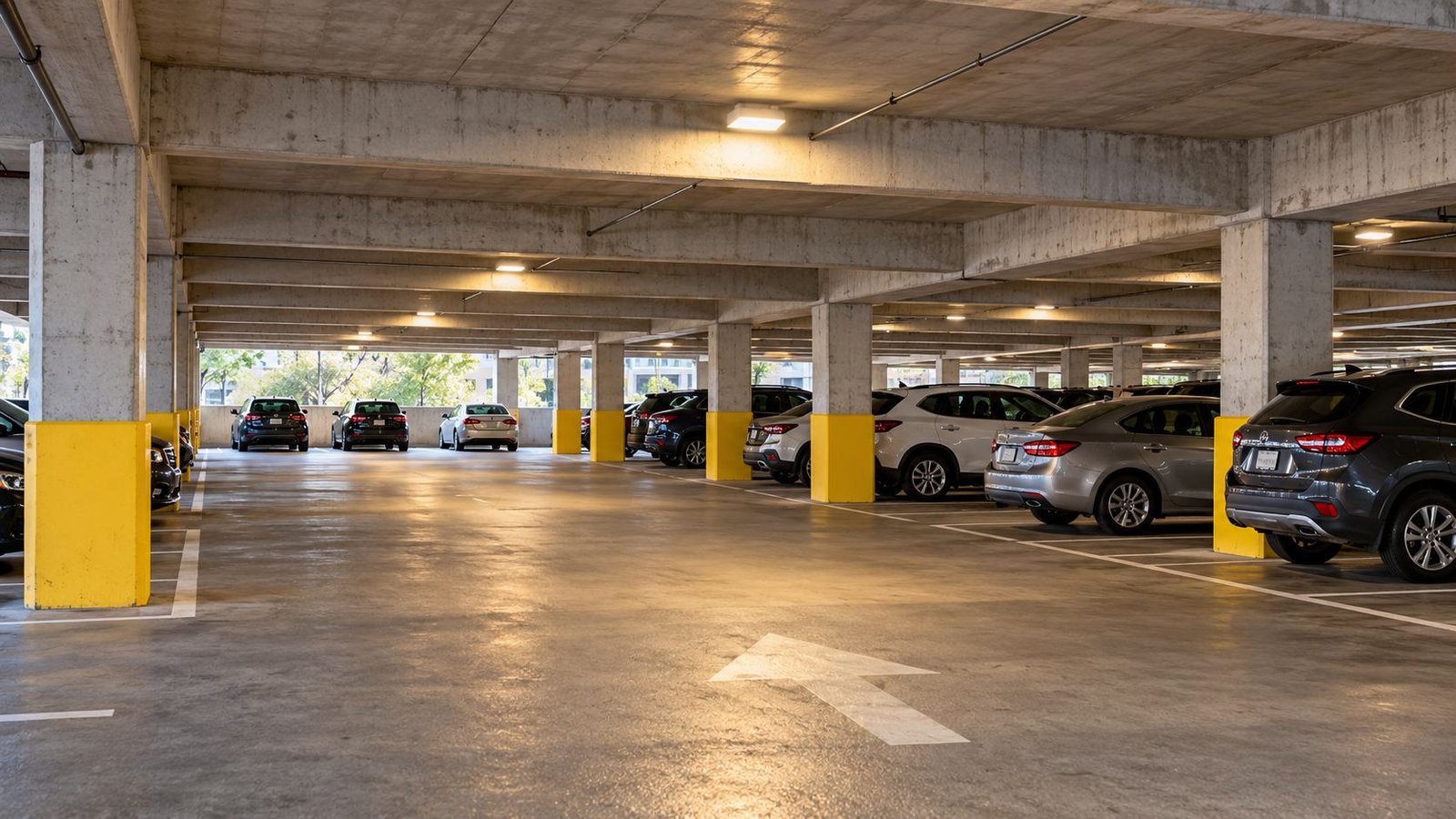
Illustrative concrete parking garage interior with yellow column guards and parked vehicles.

What Is Parking Garage Structural Repair?

Structural repair restores the strength of the parts that hold a garage up, such as columns, beams, slabs, connections, and post-tensioned tendons. It goes past surface repair. The goal is to bring each element back to the load it was designed to carry, or to add strength where corrosion has taken it away, using methods a licensed engineer specifies.

These repairs are designed by a structural engineer, and many need a DOB work permit before work begins. In a Local Law 126 report they often appear as Unsafe items, such as a beam with heavy section loss or a column that needs support. Our crews handle the shoring, removal, and rebuild while working alongside your engineer and QPSI. Surface spalls and delamination that have not cost the structure any strength are covered on our garage concrete repair page.

Structural Repair Work We Handle in Bronx, NYC

Structural jobs in a parking garage usually fall into three kinds of work.

Restoring Lost Capacity

Rebuilding beams, columns, and slab sections where corrosion has cut into the steel and concrete.

Adding Strength

Supplemental steel, jackets, or carbon fiber wraps where an element now needs more capacity than it has.

Post-Tensioned & Precast Repairs

Tendon splices, anchorage replacement, and connection repairs in garages built with these systems.

Structural Problems Found in Bronx Parking Garages

 01

Corroded Tendon Anchorages

Water at the slab edge rusts the wedges that hold post-tensioned strands until they can no longer grip.

 02

Broken or Exposed Strands

Tendons that have snapped or pushed out of the slab, often at low points where water collects inside the sheathing.

 03

Column Section Loss

Columns where corrosion has reduced the concrete and steel enough to cut their load capacity.

 04

Beam End & Bearing Damage

Cracking and spalling at beam ends and bearings, where failures can happen with little warning.

 05

Precast Connection Failures

Broken flange connectors or corroded bearing plates between double tees in precast garages.

 06

Slab Deflection

Sagging or excessive bounce in a slab, a sign it has lost stiffness or strength.

Why Garage Structures Weaken Over Time

Structural damage tends to start at the same few weak points in every garage system.

Unprotected Anchorages

In post-tensioned garages, slab-edge anchorages that were never fully sealed let water reach the most highly stressed steel.

Leaking Joints Over Bearings

Failed joint sealant lets salt water run onto beam ends, bearings, and precast stems. Sound waterproofing keeps it off.

Low Points That Hold Water

Poor drainage concentrates salt water in certain bays, so the damage there runs deeper than anywhere else.

Structural Repair Methods We Use

The engineer picks the method for each element. These are the four we carry out most often in parking garages.

Form-and-Pour Rebuilds

Damaged beam and column sections are removed and rebuilt inside formwork with high-strength repair concrete.

Steel & Concrete Jacketing

Columns and beams are encased in new reinforced concrete or steel jackets to add load capacity.

Carbon Fiber Strengthening

Fiber-reinforced polymer sheets are bonded to slabs, beams, or columns, designed by the engineer under ACI 440.2R guidance.

Tendon Splicing & Replacement

Corroded strands and anchorages are cut out, spliced with couplers, and re-stressed by trained post-tensioning crews in the order the engineer sets.

Structural Elements We Repair in Parking Garages in Bronx

Every element in the load path gets its own repair approach.

1

Columns

Base repairs, full-height jackets, and new reinforcing where columns have lost section.

2

Beams & Girders

End and bearing repairs, section rebuilds, and supplemental steel or carbon fiber.

3

Slabs & Decks

Full-depth slab replacement, strengthening, and repairs around post-tensioned tendons.

4

Connections & Bearings

Precast flange connectors, bearing pads, and steel connection plates.

How Structural Repairs Fit Your Local Law 126 Report

Structural items in a Local Law 126 report are often classified Unsafe, which means protection goes in right away and the 90-day repair window starts when the report is filed. Because these repairs need an engineer's design and often a DOB permit, planning has to start on the first day. We build from the engineer's drawings, keep the shoring in place until your QPSI confirms the work, and provide the records and permit sign-off details the amended report needs.

1. Engineer's design before work starts

2. Shoring kept until the QPSI signs off

3. Permit sign-offs for the amended report

From Engineer's Design to Restored Structure

Structural work follows a strict order so loads are always carried safely.

1

Shore & Protect

Temporary shoring goes in first, so the loads are carried safely while the damaged element is opened up.

2

Expose & Confirm

We remove the damaged concrete and let the engineer confirm what is inside before the repair is finalized.

3

Rebuild & Release

The element is rebuilt or strengthened and cured, and only then are the shores removed in the order the engineer sets.

Structural Repairs in Bronx Garages

Two local realities shape how structural work gets planned here.

Repairs Below Living Space

When a garage sits under apartments, column and transfer beam repairs are planned with extra care because the building above depends on them.

Low Clearance & Tight Ramps

Many Bronx garages have low ceilings and narrow ramps, so shoring and equipment are sized to fit and the work is staged bay by bay.

Send Us Your Report for a Structural Repair Review

Share your Local Law 126 report and any engineer's drawings, and we will plan the shoring, phasing, and repair schedule.

Upload Your Report

What Affects the Cost of Garage Structural Repair in Bronx, NY

Structural repairs are priced from the engineer's drawings. These are the factors that shape the total.

+1 (917) 355-8556

Engineering Design

The engineer's investigation, drawings, and site visits are part of the total project cost.

Load Transfer Needs

Elements carrying heavy loads need more shoring and careful sequencing before they can be opened up.

Repair Method

Carbon fiber, steel jackets, and concrete rebuilds each carry different material and labor costs.

Post-Tensioning Work

Tendon repairs need specialty couplers, stressing equipment, and trained crews.

DOB Permits & Special Inspections

Permitted structural work can require filings, special inspections, and sign-offs.

Access & Clearance

Low ceilings, tight ramps, and occupied spaces slow equipment and add labor.

Recent Garage Inspection Work in the Bronx

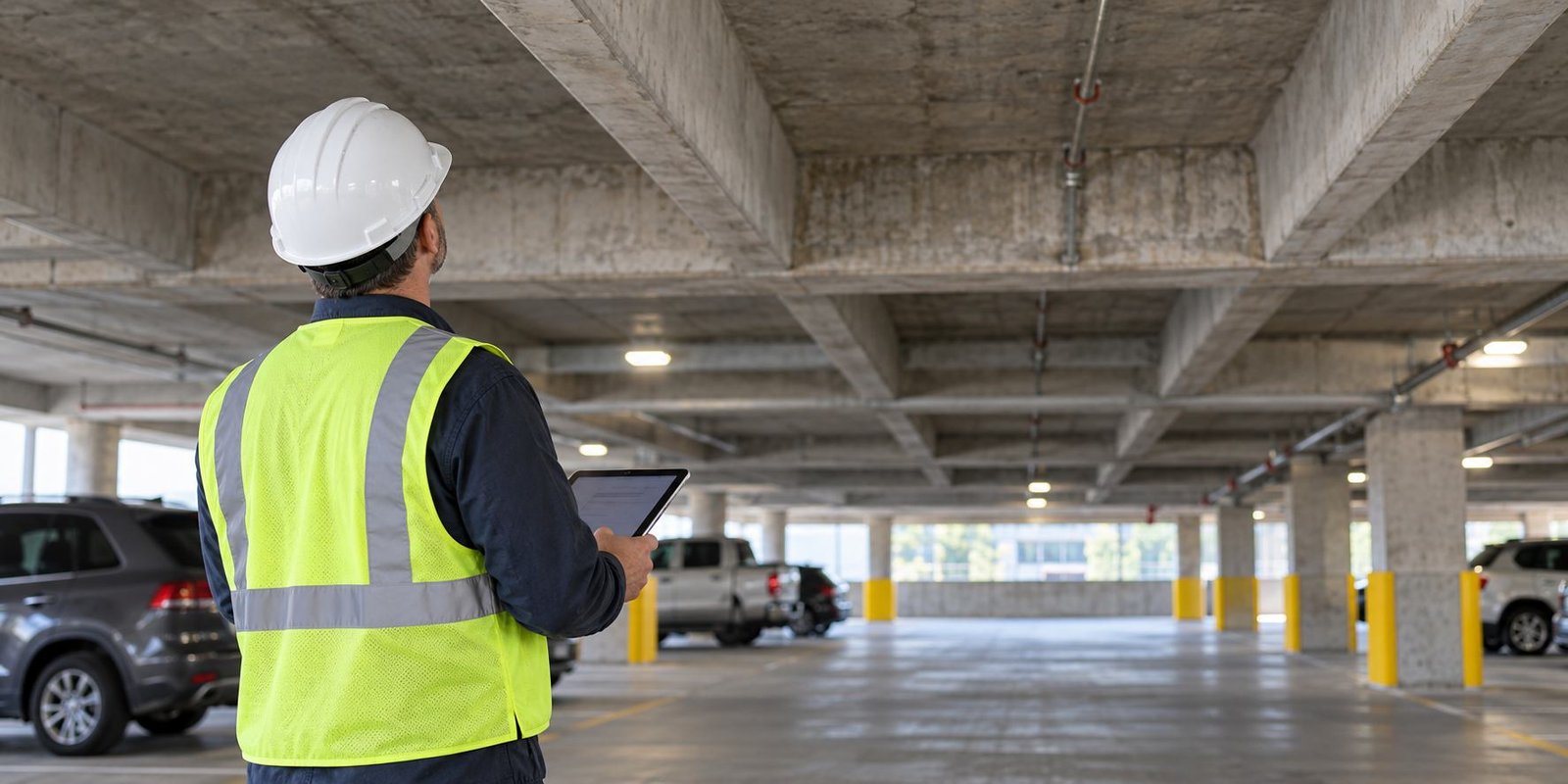
Illustrative garage inspector wearing a white hard hat and high visibility vest.

Project details pending

Real project title and details will be added here.

Illustrative garage inspector wearing a white hard hat and high visibility vest.

Project details pending

Real project title and details will be added here.

Illustrative garage inspector wearing a white hard hat and high visibility vest.

Project details pending

Real project title and details will be added here.

Illustrative garage inspector wearing a white hard hat and high visibility vest.

Project details pending

Real project title and details will be added here.

Why Bronx Owners Trust Us With Structural Repairs

Structural work leaves no room for guesswork, so every step follows the engineer's plan.

Work built to the engineer's drawings

Shoring planned before any removal

Phased work in occupied garages

Close coordination with your QPSI

What Bronx Garage Owners Say About Our Inspection Work

Verified customer review pending. Add approved review text and attribution here.

Review placeholder 01 Draft content — verified review pending

Approved customer feedback will be added here after owner review.

Review placeholder 02 Draft content — verified review pending

This draft card is reserved for a real, verified customer testimonial.

Review placeholder 03 Draft content — verified review pending

Add another genuine customer review and approved attribution before publishing.

Review placeholder 04 Draft content — verified review pending

Garage Structural Repair Across the Bronx

We restore load-bearing elements in residential, commercial, and mixed-use garages across the borough.

Garage Structural Repair FAQs for Bronx Owners

What counts as a structural repair in a parking garage?

Any repair that restores or adds strength to an element that carries load, such as a column, beam, slab, connection, or post-tensioned tendon. These repairs are designed by a licensed engineer, while surface repairs that only restore concrete cover usually are not structural.

Do structural repairs need a DOB permit?

Many do. Work that restores or changes load-bearing elements is generally designed by a licensed engineer and filed with DOB, and some of it needs special inspections. Your engineer confirms what applies before work starts.

What is a post-tensioned parking garage?

It is a garage whose slabs or beams are reinforced with steel strands that are tensioned after the concrete hardens and locked off at anchorages along the slab edges. Many garages are built this way because it allows thinner slabs and longer spans.

Can corroded post-tensioned tendons be repaired?

Often, yes. Depending on the damage, a corroded section can be spliced with couplers and re-stressed, a failed anchorage can be replaced, or external tendons can be added. The engineer decides which tendons are worth repairing and how.

Is it safe to work on post-tensioned tendons?

Only with the right plan. Tendons hold very high force, and releasing one carelessly can drive the strand out of the slab or crack the concrete behind an anchorage. The work follows the engineer's sequence and is done by trained crews using proper lock-off equipment.

When is carbon fiber used instead of concrete or steel?

Carbon fiber adds strength with almost no added weight or thickness, which helps where headroom is tight or extra weight is a concern. It is designed by the engineer under ACI 440.2R guidance and needs sound concrete underneath to bond to.

Related Local Law 126 Services

Scroll to Top